Monday, May 08, 2006

Views from the bus

Most mornings I catch the bus into work. It's a lovely trip into town as the bus drives along a section of the eastern coastal road. This morning I had my camera in my bag and decided to take a couple of photos along the way. It's a beautiful day here; the sun is shining and the clouds, whilst present, don't really seem threatening at this stage.


Along the coast road you'll often come across villagers' boats resting up on the foreshore like this one here in the village of Moata'a. Smaller outrigger canoes are another frequent sight, though quite often they're left floating tied to a large pole in the water instead of dragged ashore.

Another type of boat seen in the water more than on land, is the large fautasi. The fautasi is the Polynesian (I'm certain it's not just Samoan) version of the dragon boats found in China (and elsewhere). They hold crews of roughly forty to fifty people and are extremely heavy. When a team starts its regular practice for an upcoming race (such as the recent Flag Day celebrations in American Samoa or next month's Independence celebrations here) they leave the boat on the water.


Friday, May 05, 2006

Manono's mobile tower now increasingly mobile


About a month or so ago I wrote a couple of posts about the beautiful island of Manono. In one of them I mentioned the mobile phone tower that sits atop the ancient star mound on Mt. Tulimanuiva and the controversy within the community (and elsewhere) its installation caused.

Today's Observer has a report stating that the 30m (not 50m as I guessed wildly last time) tower will be moved. SamoaTel's acting CEO Colm O'Donovan has confirmed that they are in negotiations with a contractor to have the tower removed from its present location. Apparently they have found a new site elsewhere on Manono that meets all relevant parties' criteria.

This is great news. The star mounds of Samoa are some of the oldest human monuments in Polynesia. They have proven invaluable to archaeologists and historians in tracing the spread of human habitation across the region and are of enormous cultural significance to all Samoans. I can only hope that SamoaTel not only removes the tower and attendant equipment shed but also helps restore the site to the condition it deserves.

On the other hand, climbing the tower does afford a rather spectacular view. I might need to head back over there and climb it one last time. ;)

Thursday, May 04, 2006

All wrapped up

The most annoying thing about bandages is that the moment you put them on, everything they cover becomes incredibly itchy. Given good bandages are sterile things and tend to breathe very well, I'm certain it's largely psychological rather than physiological.

One small part of my tattoo continues to play up and refuse to heal well. Sure, thanks to local conditions and no doubt my inadequate aftercare, it became infected, but it's not all my fault is it? Anyway, I've received (finally) some sound medical advice which sees me wrapping gauze around the wound until the "exudate" (read: "gunk and puss") disappears and taking a second course of antibiotics. Sadly, the wound looks quite deep. I only hope it doesn't leave a significant scar that would mar an otherwise great tattoo (well, in my opinion anyway).

Did the earth move for you too?

Yesterday morning I was awake or awoke, at 4.30 and felt myself shaking. I thought this was a bit weird (and annoying because that's a bad kind of sick), but then I noticed that the bed was creaking, and as the seconds passed, that the windows and whole house was making a fair bit of noise. All the dogs in the neighbourhood went dead quiet but the insects kept singing their symphony. Earthquake!

The quake lasted a while - easily three minutes - and picked up intensity about halfway through. With the epicentre in Tongan waters there really was never any danger of the quake itself manifesting dangerously here in Samoa. Furthermore, with Apia on the other side of 'Upolu, the chances of any tsunami from the region of Tonga actually causing any real grief here were close to nil.

Whilst I lay in my bed shaking and shuddering about it struck me that it felt just like those massage beds or chairs. The ones where you put in a dollar and it vibrates for a few minutes (no, not those other "massage beds"). Funny, the thoughts that run through your head.

Moments after the quake finished all the dogs in the area went beserk for a couple of minutes before settling back down to sleep. I slowly joined them in slumber for another couple of hours then woke up and made my way into work.

Once I made it into work I discovered that the Prime Minister declared all schools and government offices closed for the day in response to a tsunami alert issued earlier in the morning by the Pacific Tsunami Warning Centre (in Hawaii). I spent the morning shopping and enjoying good coffee at a nearby cafe. Two hours later his decision regarding government offices was reversed and we went back to work.

Even though yesterday's earthquake generated only the smallest of tsunamis (Niue measured a 0.21 metre wave), the threat of serious damage in Samoa is very real. Most villages in Samoa are coastal and in Apia itself, many of the emergency response arms of government have their main offices metres from the shore. The meteorology, government radio, police and fire station offices are all exposed in this way.

Another important issue here is education. Given the responses in today's Observer newspaper about the tsunami alert (Street Talk - "How about the tsunami alert?"), it's clear that many Samoans have little understanding of the nature of the event:

"I think that the warning came at the wrong time and that they (Meteorology Division) should have warned the public before the earthquake hit."

"I think that they should have warned us the night before instead of early this morning when they were expecting a tidal wave to hit our shores."

"This is a negative sign which is an indication that the Meteorological office were not doing their job."

"The sudden warning was not very professional because it was a sign that the public have no one to trust if a natural disaster hits."

Questions are already being asked about the capacity of the government to respond in a timely and appropriate fashion to natural disasters. I imagine we'll see that issue thrashed out in the newspaper over the next couple of days. I wonder though, given the responses above, if we'll see the same kind of attention paid to the importance of public education as part of any natural disaster plan.

Tuesday, May 02, 2006

Business House sports


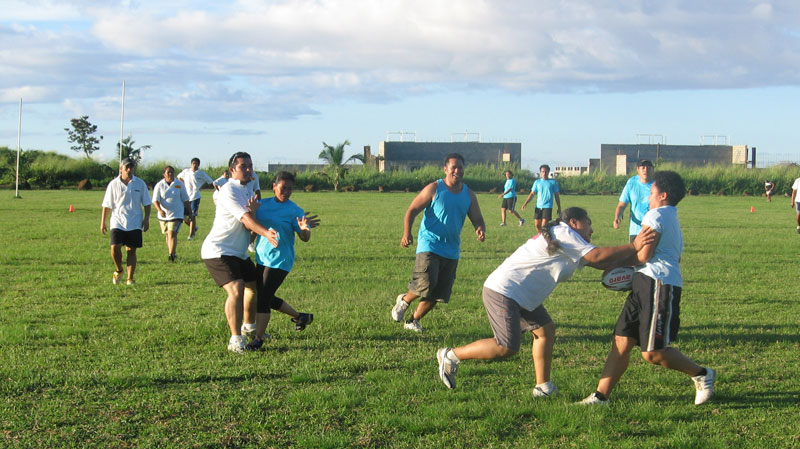
Every year a range of social sports competitions are held in Apia. They are known as the "Business House" competitions, with teams from major government ministries and local businesses. The level of interest and involvement in these comps is very high; everyone loves to get out and have a run around once or twice a week after work. The degree of competitiveness varies across individuals and teams, but at the end of the day they're intended as social competitions and not meant to be too serious.

The first competition this year is seven-a-side touch footy. The Ministry of Prime Minister & Cabinet has fielded a team, comprised mostly of Immigration staff. We had our first game last week which saw us up against the Ministry of Foreign Affairs team. Sadly, with three or four of their players members of a touch footy team that plays in the regular "professional" competition, we were somewhat outclassed and lost the match. Yesterday's match against the TradePac team was a different story however, with our team notching up a win, four tries to three.

Sadly, I've had to restrict my participation to being the photographer and water boy. As my tattoo is still in the process of healing, I can't get out there and have a run around, which I find very frustrating. Hopefully I'll be able to start playing from next week. With the competition's pool round only lasting six weeks, I'm loathe to miss too many more matches.

The picture shows one of the Immigration officers, Vaileta, rather vigorously "touching" the ball carrier in last's weeks match against Foreign Affairs. This was as close to a big hit as we came during the match.

Wednesday, April 26, 2006

Samoan Tattooing

The art of tattooing has long existed in Samoa. The word tattoo itself is derived from the Polynesian word tatau. Dutch explorers who reached Manua island in 1722 noted that the Samoans wore "artfully woven silk tights or knee breeches". The explorers clearly didn't get close enough to the individuals to recognise that they were not wearing breeches, but were sporting the traditional pe'a tattoo, which stretches from the waist down to the knees.

Deciding to have the pe'a is a mammoth undertaking by any individual. Something in the order of 60-65% of the body is tattooed over as short a period of time as the recipient can handle (six or seven days’ work over a span of about two weeks is typical). After the tattoo is finished there follows a long period of recuperation; six months to a year is a normal kind of time frame. More often than not people are unable to work for much of this time to let their body rest. Because of this, the significant upfront cost and the social implications, any person wishing to have the pe'a must first seek permission from all their family.

A week ago my friends and I visited Su'a Petelo Suluape in the village of Falesiu. Suluape is considered as the leading tattoo artist in Samoa and is well known worldwide for his traditional tattoo work. He and his brother (sadly killed last year in New Zealand) have travelled the world showcasing their work and promoting the tattoo traditions of Samoa. When we arrived there was a man who had flown out from Los Angeles to have his pe'a done by Suluape. They were finishing up their sixth day of work and the tattoo was almost complete. It looked amazing, but the pain and distress on the man's face as he slowly moved to the edge of the fale to rest gave sharp indication of exactly how serious and challenging a process it is. His wife was flying out this week to take him back home and look after him over the coming months.

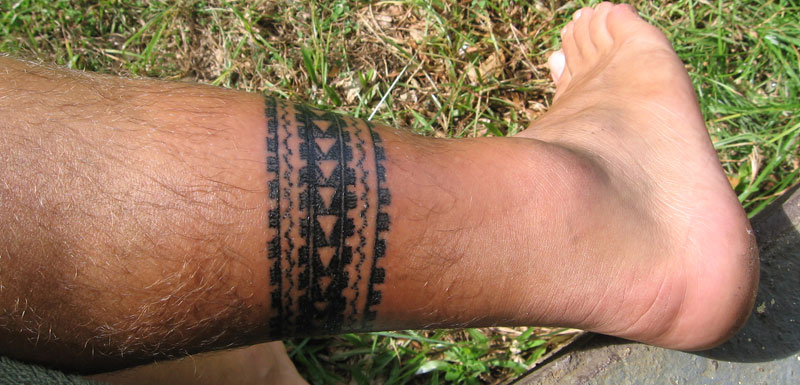
Whilst not there for the pe'a, two of us did have Suluape tattoo our legs in the traditional Samoan fashion. The only creative control we had over the process was in determining how big the tattoo should be (ie. we shaved as much, or as little, hair off our legs to provide the "canvas"). The rest was in Suluape's hands.

Suluape uses the traditional implements and techniques to do his work. He uses a mallet to strike a variety of combs with extremely sharp teeth to push the ink into the skin. The mallet is known as the sausau and the combs have different names. The autapulu is a wide comb used to fill in large dark areas of the tattoo. The ausogi'aso tele is used for making thick lines, the ausogi'aso laititi for thin lines. The aumogo is a small comb used for making a variety of small marks. For our tattoos, Suluape did not need the autapulu (thank goodness!). Suluape's combs seemed to be fashioned from some kind of glass or plastic. Traditionally the combs were carved from a boar's tusk.

Did it hurt? Oh yes. It took about one hour for the work to be completed and it was an hour spent grinding teeth, clenching fists and practicing lots of meditative breathing techniques. It was particularly painful when Suluape was working on the skin directly above my shin bone. I’m extremely happy with the result however and consider it to be well worth the pain (although what we experienced is clearly nothing compared to what the man having the pe’a must be feeling).

The history and art of Samoan tattoo is fascinating and I’ve barely scratched the surface of the topic. The process of having the pe’a is highly complex, full of taboos, customs and demands on the tattooist, recipient and the recipient’s family. It’s well worth another post, which I’ll try and get around to soon, but in the meantime, if you’re interested, I suggest reading this introduction to the pe’a and traditional Samoan tattooing.

The first photo is taken from last year's Samoan Tourism Authority calendar. It's a great example of the pe'a. The second shows Suluape striking the aumogo with the sausau to create small lines of my friend's tattoo. The third image shows my (swollen) leg the morning after having it done. Since then my leg and foot have swollen up well beyond normal size and I've had a small amount of infection to deal with. As of today though, the swelling is almost entirely gone and the course of antibiotics I'm taking is having its effect in dealing with the infection.

Tuesday, April 25, 2006

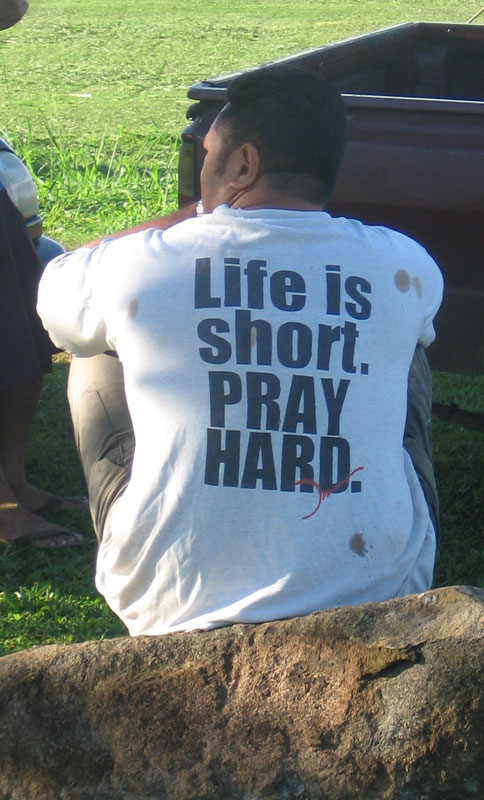
Life is short. PRAY HARD.


I spotted this t-shirt whilst at the first match of touch football of the season for the inter-Ministry sports teams. It's by no means the only religious t-shirt I've noticed since I've been in Samoa, but I like it. The other one I like has "No weapon formed against me shall prosper. (Isiah 54:17)" on the front, with "God's got my back" written on the back. All in big bold bright yellow lettering on a black t-shirt.

Saturday, April 22, 2006

Just another day at the office

Yesterday (Friday) was my first day back at work after a couple of weeks off. My timing could not have been better. A relatively straightforward working day was followed by two work-related social functions that were great.

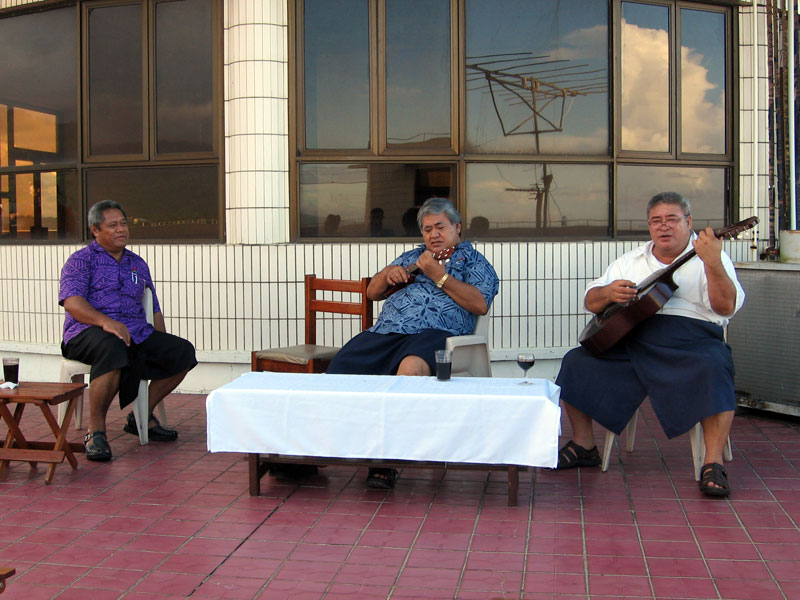
First, we joined Prime Minister Tuilaepa and Ministry of Prime Minister & Cabinet CEO Poloma Komiti on the roof of the government building to celebrate the PM's recent re-election victory (which warrants a post of its own). The government building is the tallest in Samoa and the view of Apia and the surrounding villages is unbelievable. Pictured here is the view towards Mt. Vaea with the Catholic cathedral in the foreground. Smoke from a few fires can be seen floating upwards in the background.


As the sun set the colour of the sky and clouds changed dramatically, and the number of fires burning in and around Apia increased dramatically. The fires were most likely coming from umu ovens, as families prepared their evening meals.

The PM gave a small, lighthearted speech and everyone had a good time, enjoying some food and drink. I was most delighted however, when Tuilaepa whipped out his ukelele and entertained the assembled with some favourite Samoan tunes. The head of the Press Secretariat accompanied the PM on the guitar and many others sang along. Who knew that the PM likes to rock out on the uke!


After this function reached its conclusion, I joined a small number of Immigration staff in attending a dinner at the Chinese embassy. With a considerable economic, aid and development presence in Samoa, the Chinese are always working with Samoan Immigration in obtaining the relevant entry permits for the various Chinese nationals who come to Samoa. With some new diplomatic staff recently arrived in Samoa, and the new Chinese ambassador due in under two weeks, it was a good opportunity for everyone to get to know each other a little better.

The meal we had was great. We enjoyed a selection of Chinese style dishes, some of which featured a degree of local flavour. Chicken and breadfruit stir fried in ginger, huge crabs wok fried with ginger and spring onions, steamed whole fish and amazingly good tuna sashimi were just some of the highlights. They also had a bean curd dish, which I was most interested in as finding tofu in Samoa can be a challenge. It transpires that their chef imports the yellow beans from China and makes his own bean curd. After dinner our hosts turned on their Karaoke machine and we all sang a few songs to conclude the night.

For a first day back at work, it was a good one. Just another day at the office? I certainly hope so.

Saturday, April 15, 2006

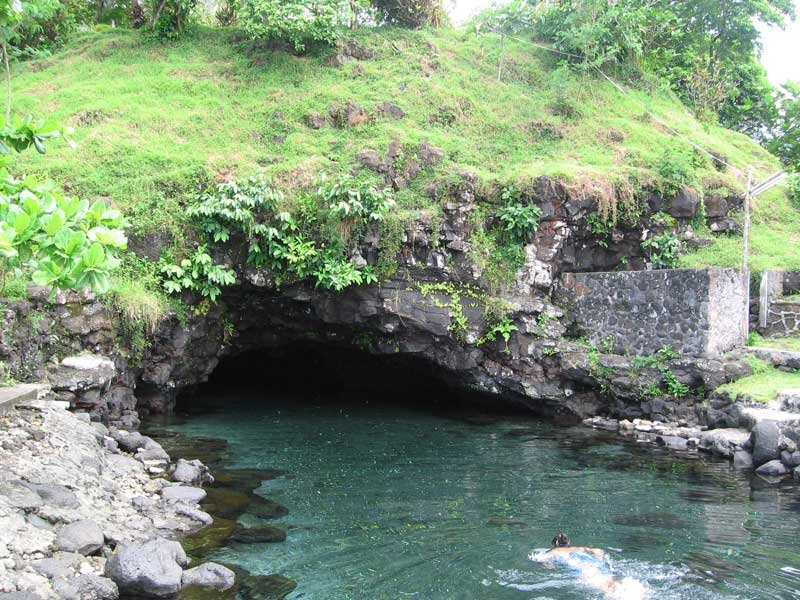
Piula Cave Pool

About thirty minutes east of Apia, along the coastal road, is the Piula Theological College. The college was established by the Methodist Church in 1868. Piula is a transliteration of "Beulah", meaning married.

The college sits on beautiful grounds. There is a large oval which is used for games of kirikiti and the real draw card of Piula is the cave pool which is found directly underneath the foundations of the main church on the grounds.


A large freshwater pool is separated from the ocean by a wall of black volcanic rock. The water is cold and clean and the pool is inhabited by many small fish. At the rear of the pool, one can dive underwater and see light filtering through the wall. A small, three metre long opening connects the pool to a second, smaller pool. It might seem a little daunting at first, but it's an easy swim.


Sunday, April 09, 2006

Party people

Last Friday I celebrated my birthday. Given that I'm only in Sydney for just a few days, I wanted to really make the best of the night and have as good a view of the city as I could muster. To that end I booked some tables at the Glenmore hotel in the Rocks. The view from the rooftop bar is spectacular:


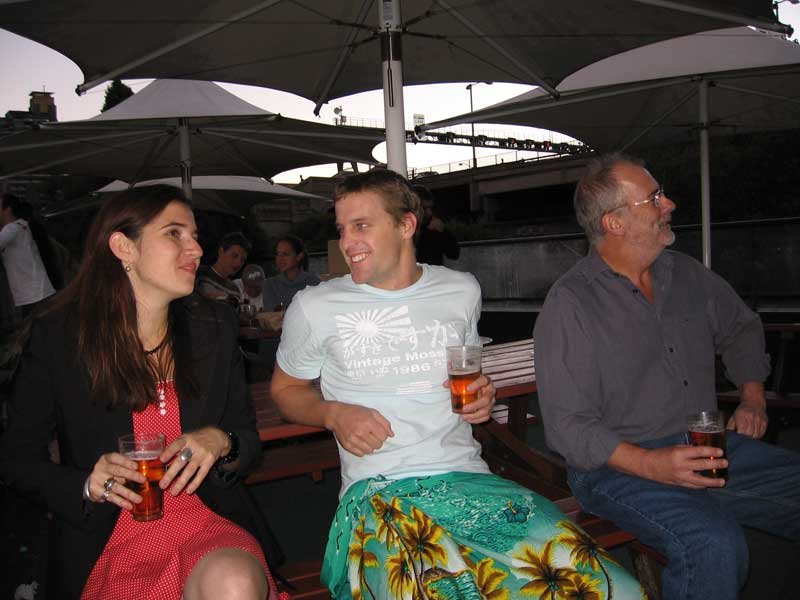
We had a fantastic night. I had friends I've known for 25 years meet friends I've known for 25 weeks:


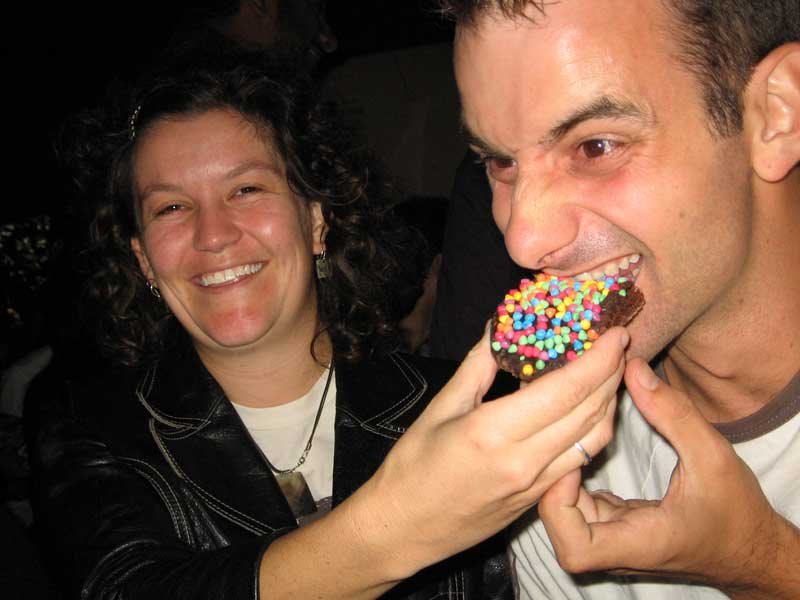
There was birthday cake:


There was an abundance of Davids:


And there were manskirts:


It was definitely the best birthday I've celebrated in a while. A big thank you to everyone who made it.

Thursday, April 06, 2006

Sojourn in Sydney


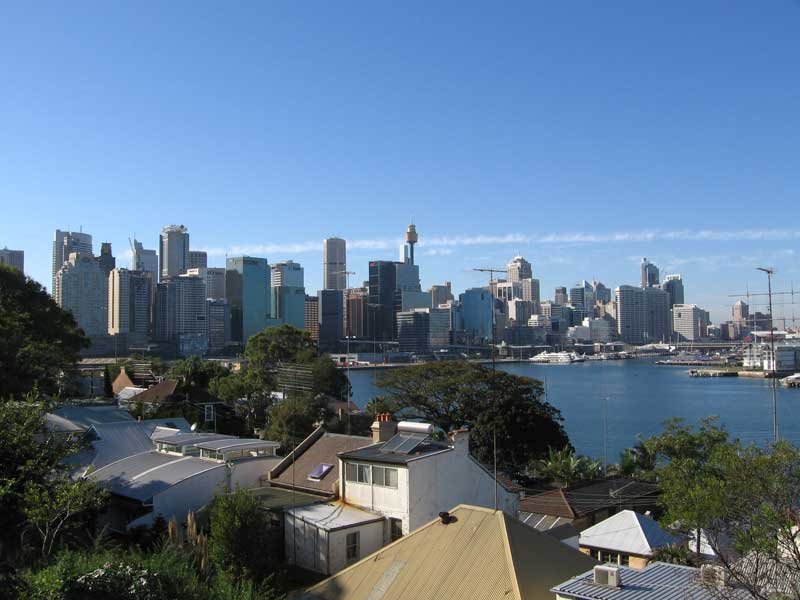
I've managed to whisk myself away to Sydney for a few days in order to celebrate my birthday. It's fun and funny coming back to my home town after six months away. It's much noisier, smellier, busier and cramped than I remember it. I keep wondering why people don't smile at each other on the street or wave at each other as they drive down the road. Still, I know the place like the back of my hand and have enjoyed visiting favourite haunts, catching up with friends and family and eating fantastic food.

The picture shows the view of the city skyline from Balmain East, where I used to live until moving to Samoa. Sydney is, without a doubt, a beautiful harbour city.

Wednesday, March 29, 2006

Land rights and the World Bank

The allegations made by the SDUP and the Samoa Party last week about the HRPP Government signing a secret deal with the World Bank over land registration seem to have hit a raw nerve. Yesterday Prime Minister Tuilaepa ordered the Attorney-General's office to begin legal proceedings against the party leaders who authorised the joint statement.

In justifying his order, Tuilaepa said the statement was grossly defamatory. "In my opinion as leader of the country, they have gone overboard the decency level of political campaigning," he said. "My decision is to protect the electoral system in the future...You can't just make misleading statements about these things and expect to get away with it. What these people have done is that they have overstepped the mark." So it would seem that Tuilaepa is acting on behalf of the Government of Samoa. But on what grounds could the Government take these individuals to court?

On the basis of Tuilaepa's comments, the court action will probably be based on a claim of defamation. Yet, SDUP deputy leader Asiata Saleimoa Va'ai (himself a lawyer) says, "There is no such thing as defaming a government...Only a person may be defamed." If this is true (I have absolutely no idea) then Tuilaepa can really only claim personal defamation. The consequence of which would mean that it would be wrong for him to use Government resources to make his case in court. Until the details of the case are known, which I'm sure will only emerge after the election, little more can be said.

All of this talk however, dances around the real issue. Is there an existing agreement with the World Bank through its International Development Agency and what are the details of such an agreement? Does the HRPP intend to change land registration legislation to make the registration of customary land conform with the Torrens system used for freehold land? Tuilaepa has, as yet, failed to answer these questions properly. The SDUP and the Samoa Party have also failed to really provide the kind of proof that would make their allegations iron-clad. Whatever the outcome of the election on Friday, this story is far from finished.

Tuesday, March 28, 2006

Samoan Politics

The candidates are in high campaign mode, the party policies have all been announced, and it's just a couple of days until Samoans choose their government for the next five years. So what does the political landscape of Samoa look like? Who is likely to govern the country?

For the last 23 years Samoa has been ruled by the Human Rights Political Party (HRPP). They appear very firmly entrenched and have broad support across the country. Led by Prime Minister Tuilaepa Aiono Sailele Malielegaoi, the party has several prominent community and business leaders as members.

The major planks in the HRPP election platform are economic growth and infrastructure development. Tuilaepa, and the Deputy PM and Finance Minister Misa Telefoni, regularly point to the sustained economic growth Samoa has enjoyed over the last few years. Further, with the help of considerable overseas aid there has been a huge push recently in infrastructure development projects. The latest cab off the ranks is the redevelopment of the Savalalo/Sogi wharf and the fish markets next to it. The times they are a changin' in Samoa, and the HRPP has positioned itself as the driver behind the wheel.

Is this enough to get the HRPP over the line? Many suspect it is, but there is a growing sense of tiredness at the continued rule of the HRPP. Le Mamea R Mualia, head of the main opposition party the Samoa Democratic United Party (SDUP), has been polling very well over the last couple of months. He has consistently polled ahead of Tuilaepa as preferred leader and the SDUP has enjoyed several poll "wins" ahead of the HRPP.

The SDUP has focused on three main areas for its campaign: health, education and governance. If elected, the SDUP would conduct a review of teachers' pay and make a strong push to provide free and compulsory primary education. This has been received quite well but it is perhaps the issue of health that resonates strongest with the Samoan people, thanks to the bitter pill of an eleven week strike by Samoa's doctors late last year.

Two major problems plague the public health system of Samoa. First, the overall cost of the public health system and how that cost should be met continues to vex government. With newer, far more expensive facilities (such as the recent kidney dialysis unit) becoming available this issue becomes ever more important. Second, as the doctors' strike illustrated, the present nominal level of payment for health services staff is a significant disincentive for health care professionals. Doctors have started to move into private health and others have moved overseas to advance their profession. Samoa cannot afford this kind of skills drain.

A more immediate challenge for the present Minister for Health is election rival Su'a Rimoni Ah Chong. Su'a, head of the Samoa Party (SP), is perhaps the most outspoken of all the party leaders. Whilst the SP and the SDUP share their concern about governance, it is Su'a who has really championed this issue ahead of all others.

Su'a is well qualified to campaign on this issue, as he was formerly the Samoa Controller and Chief Auditor. In this role, Su'a issued a report in the mid nineties that implicated a number of cabinet ministers and senior government officials for fraud and other misdemeanors. The report led to his dismissal and amendment of the Samoan Constitution.

Su'a wants to see independence brought back to many government portfolios, most notably the oversight agencies of the Audit, Electoral Commissioner and the Attorney General offices. A significant reduction in government wastage features strongly in the SP manifesto as well.

Are these issues really the ones foremost in the minds of most Samoan voters? The issues of health and education most certainly hold the interest of the voting public but other issues such as land ownership are also extremely important. There are currently two large land title claims before court and allegations made by the SDUP and SP last week have put the HRPP under scrutiny. The allegations hold that the HRPP reached an agreement with the World Bank to reform the ownership of customary land (which represents 80% of all land in Samoa) to facilitate easier commercial development. How well this sits with villages remains to be seen. My suspicion is not very well.

In spite of these concerns, it would seem that the HRPP are going to win the election. Most of the people I have spoken with about the election seem pretty convinced of that. By themselves, neither the SDUP nor the SP would ever have the numbers to form a majority government, and with the HRPP fielding twice as many candidates as the SDUP (which has fielded more than the SP), the numbers do seem to stack up in the HRPP’s favour.

Still, the SDUP in particular have done well to present themselves as a credible alternative government. They have argued their platform consistently, clearly and early. It’s a lesson the Australian opposition parties could do well to learn from.

Thursday, March 23, 2006

Crab for dinner


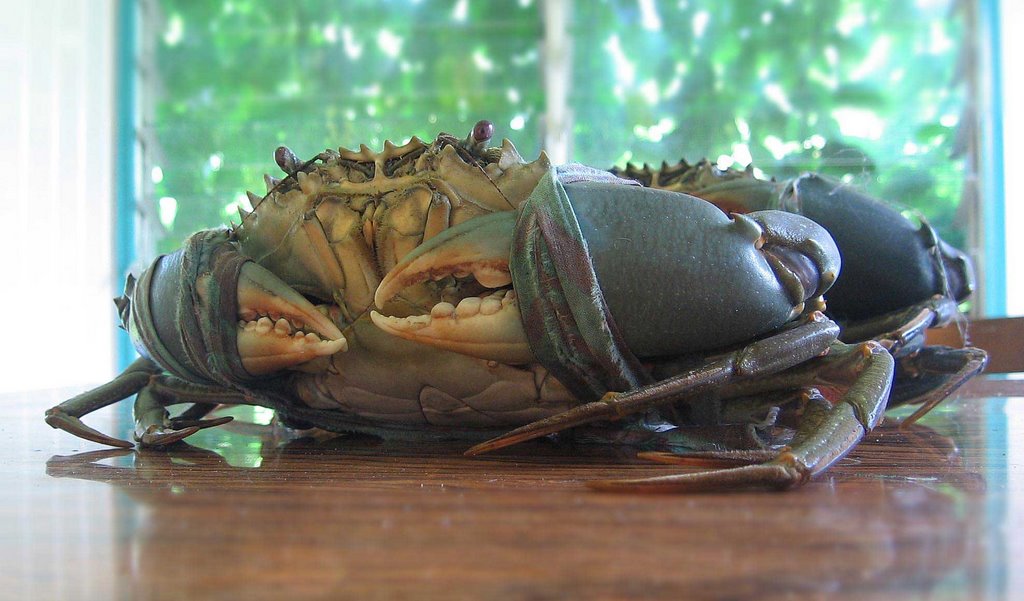
A few weeks back I chanced upon a man selling freshly caught crabs on the side of the road. Seeing crabs this size is a bit of a rare thing, so I did what any sensible person would do and bought two of them immediately.

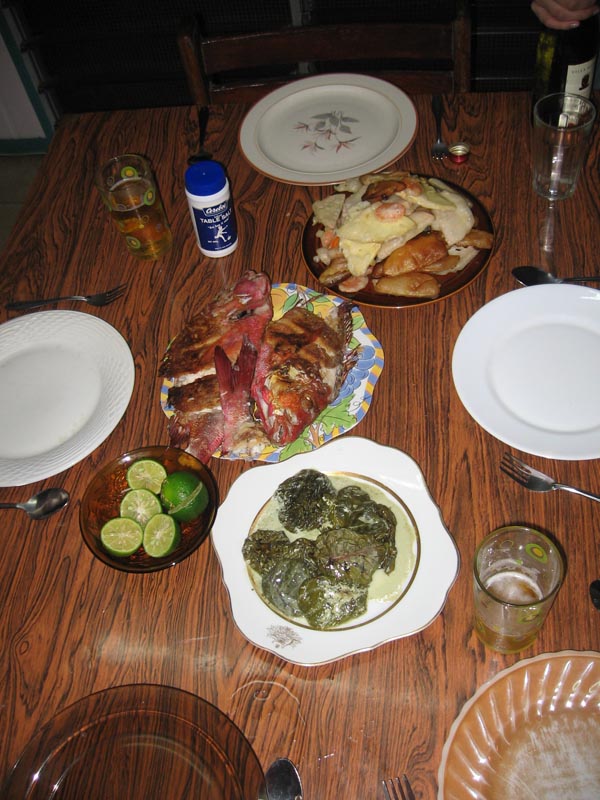
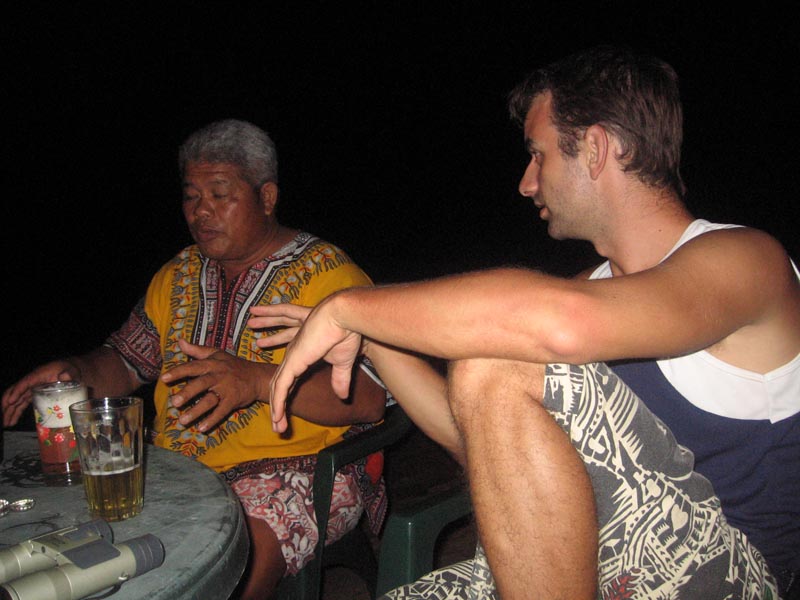
I invited a few friends over and we had a great meal. Rice, steamed chinese greens and chilli crab. And the requisite cold Vailima of course. Very nice indeed!

Sadly I haven't seen anyone selling crabs since. There aren't too much shellfish and crustaceans available in Samoa and I'm not too keen on getting up at 5am to head to the fish market to really see what's available on a regular basis. So for now I shall just have to hope that luck is with me whenever I walk down the road.

The power of village politics

I wrote recently about the nature of village politics and how there is a strong community based approach to the management of all village affairs. I mentioned that given the nature of the system, there would be little room for oportunistic individual behaviour. Just this weekend we've seen an interesting example of this at work.

Samoans head to the ballot boxes at the end of the month. The election itself warrants at the very least a post of its own, so for now I'll supply only the barest of detail (sorry). Parliament has 42 seats, 40 of which represent village constituencies. Each constituency is typically comprised of several (say two or three) villages and most constituencies have a single sitting parliamentary member.

One such constituency is that of Faleata East. It is comprised of the villages of Lepea and Vaimoso. Prior to the 2001 elections, the villages came to an agreement stating that they would take turns fielding candidates to represent their constituency. Under this agreement, Faumuina Anapapa of Lepea, was elected unopposed. Anapapa was appointed to a new post in 2002, leaving his parliamentary spot vacant. Once again honouring the agreement, Vaimoso village did not field a candidate and Lepea's Lepou Petelo II replaced Anapapa.

By virtue of the standing agreement between the villages, Vaimoso expected to field its own candidate without opposition from Lepea. Both Vaimoso and Lepea residents were shocked to learn that Lepou has registered as a candidate for the upcoming elections.

According to news reports over the weekend and in Monday's Observer newspaper, the Lepea village council (their fono ale nu'u) acted swiftly to punish Lepou for his actions. Lepou and his family were told, in no uncertain terms, that they were to be banished from the village. They were to have until 4pm Monday to comply by the order.

Tuesday's Observer provided the next chapter of the story. The Land & Titles Court, responsible for mediating issues of customary land and matai title ownership amongst other things, ruled that there was nothing in Samoan legislation that specifically denied Lepou the right to stand as a candidate. This in itself was not particularly surprising I suppose. However, Lepea's response was to _decide_ to allow the Land & Titles Court ruling to stand strikes me as a fine indicator of the power (if not always absolute) at the village level.

Some colleagues at work have told me that in similar situations in the past, where a family has been banished only for the decision to be overruled, it has not been uncommon for that family's house to be burnt down and for the family to be otherwise ostracised from the community anyway. I doubt strongly that something like this might happen in the case of Lepou; the real test will be which way the members of Lepea vote come election day.

Tuesday, March 21, 2006

"If it's bad...it must be good!"


So reads the slogan for Bad Billy's, one of the premier bars/clubs in Apia. It's not as upmarket as Paddles but it consistently draws bigger crowds and plays pretty much exactly the same music (mind you, so does every other bar in Apia). It's definitely my favourite place to head to for a night out, as I'm guaranteed to either have company in the form of other volunteers who I go with, or work colleagues and other locals that I inevitably bump into whilst there. They also serve good cold beer.

One of the best things about Billy's is the sign above the entrance that outlines the conditions of entry that patrons must abide by. Most of the rules (see the picture) are ones we're used to seeing in Australia but I can't ever recall a bar or club explicitly denying anyone who is, or aims to be, "too cheeky".

Palusami


The Samoan dish most popular amongst all the volunteers is easily palusami. Along with taro, palusami is a staple dish, always prepared in an umu oven. The good news for us palagis however, is that you certainly don't need an umu oven to prepare your own.

To make palusami all you need are (relatively young) taro leaves and coconut cream. If you wish, you can add some onion and some varieties see small pieces of chicken or fish added too. Preparing your taro leaves is important. The thicker part of the stem running down the leaf needs to be trimmed back, and it's important to break off the tip of each leaf as you construct your palusami. Not doing so will make for a bitter taste (or so every single Samoan I've asked says).

Once you've prepared your taro leaves making the palusami is easy. Lay one big leaf flat in your hand and rip up another into three or four small pieces and place them on top of the leaf. Make a small pocket of the leaf and place some diced onion in and then pour coconut cream in. Fold the leaf over to enclose the pocket and then wrap the leaf with aluminium foil.

Place the palusami in a small baking tray and cook in a conventional oven for about 45-60 minutes at 200° C. Simply unwrap the foil and carefully lift the palusami onto your plate. Yum!

Pictured here is a photo from the night a few of us made our palusami. Along with the palusami we cooked a couple of red snapper caught that morning (simply salted and dusted with flour) and some taro, carrot and breadfruit tempura. Served with some cold Vailima (the local beer) it made for a perfect pseudo-Samoan dinner.

Monday, March 13, 2006

More Manono


Here are two more photos from Manono. The boat pictured here is Leota's, berthed at the end of the concrete ramp that leads directly up to his house. The other photo was taken at one of the other three villages on Manono, where a group of young kids were playing by the water's edge.

Village life


Whilst staying on Manono I had the opportunity to learn a little about the nature of village politics and the role that matai play in the management of family and village affairs. Leota (pictured here) is a matai (chief) of his village and also the head of his aiga (extended family). He was more than happy to explain his responsibilities to both his family and his village and village politics more generally.

Leota was absent from his house for most of Saturday as he was busy attending his village's monthly fono ale nu'u (literally "meeting for the village"). Once a month the villagers meets to discuss (at length) any and all issues until a satisfactory outcome is reached. The nature of the discussion during these meetings is to avoid direct confrontation. Typically everyone will talk around an issue until a consensus or majority view is reached.

After the fono ale nu'u finished, Leota and all the other matai held another meeting to elect a new head matai for the village. The previous chief matai passed away in February and it was time to appoint someone in the position. Leota spoke only a little of the nature of the role but made it clear that the head matai effectively held the power of veto for any issue discussed during a fono ale nu'u. It would seem that this power is rarely used; any head matai who decides against the majority view too many times may well find themselves stripped of their position.

The head matai represents only one aspect of the village’s power structure, a largely intra-village focused one. The pulenu'u is a matai who has been selected to represent the village in all broader affairs, typically regional and national government driven. The best analogy we have in Australia is that of the town mayor. The head matai is normally not elected as the pulenu’u.

The fono ale nu’u exists to provide an arena for everyone to raise their concerns and discuss village business but specific village responsibilities fall upon a number of different committees. In this way the business of managing the village is shared amongst all of its inhabitants. The women’s committee, known as the aualuma, typically discuss beautification projects for the village and fundraising activities. Married and unmarried women over the age of 21 (or younger but out of school) attend these meetings. The aumaga or taulealea is the young men’s committee, where all untitled men over the age of 21 are typically responsible for managing the village’s plantations and other labour intensive tasks (fishing, grass cutting, etc., preparing umu). I’ve already mentioned the matai-only meetings that take place.

The hierarchy within villages would appear quite established. Leota certainly gave the impression that such is the case. However, as most of the village’s business is determined through consultation and communally reached decisions, there seems little opportunity for strongly individualistic behaviour. The pulenu’u or head matai for example, are going to find it difficult to exploit their positions for personal gain.

There would seem little to indicate that this manner of managing village business is going to change much in Samoa for a while. It is really only in Apia that there is a weakening of these structures. The main reason for this would be that many of people here only live in Apia because of work obligations. Even so, many return home to their own villages over the weekend, where their social and community responsibilities still lie.

Sunday, March 12, 2006

Manono


The Apolima Strait between the two large islands of Savaii and 'Upolu is home to the small islands of Manono and Apolima. Apolima is quite difficult to reach. Manono however, is much easier to reach and well worth visiting. It is, by choice of its residents, a very traditional island. Dogs are not allowed on the island nor are any vehicles (there aren't any roads anyway). It is the third largest island in Samoa yet only 3 sq km in size, with four villages and a population between 1000-2000.

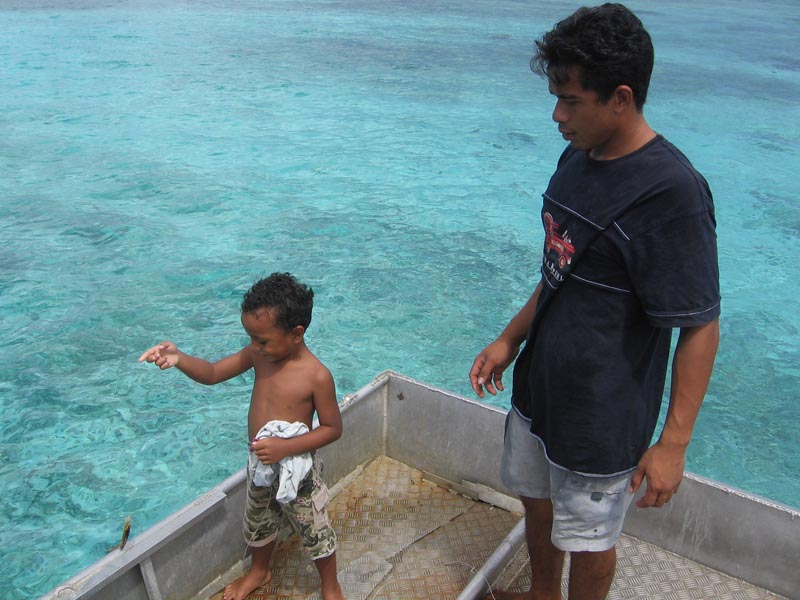
There are two places open to visitors who wish to stay on Manono, one on the east coast, the other on the west. I just spent two nights staying at the latter, with Leota, his wife Sau and his several children (including young Aneti, pictured here "fishing" with his older brother Mose).

There's not a great deal one can do whilst on Manono except relax. Walking around the perimeter of the island takes somewhere between one and two hours. There are a couple of sites of interest, most notable of which (at least in theory) is the ancient star mound that is found on the top of Mt. Tulimanuiva. Sadly, the reward for making it to the top of the mountain is the sight of a mobile phone tower stretching some 50 metres into the sky. What remains of the 12-pointed star mound itself is obscured by vines and other foliage.

According to Leota, the family that owns the customary land on which the mountain lies made a deal with a telecommunications company to have a mobile phone tower installed. I got the impression that they did this without any broader consultation on Manono, nor indeed within their own village. It was only after the tower itself was installed that the rest of the island was able to bring a stop to things. Yet the tower remains.

The only upside of there being a huge tower on top of Manono is that climbing it affords you a spectacular 360° view. The other picture is the view from the tower back towards the side of the coast near where I stayed (the white specks are a couple of seabirds). Manono is completely surrounded by reefs so the water all around it is a magnificent cyan colour.